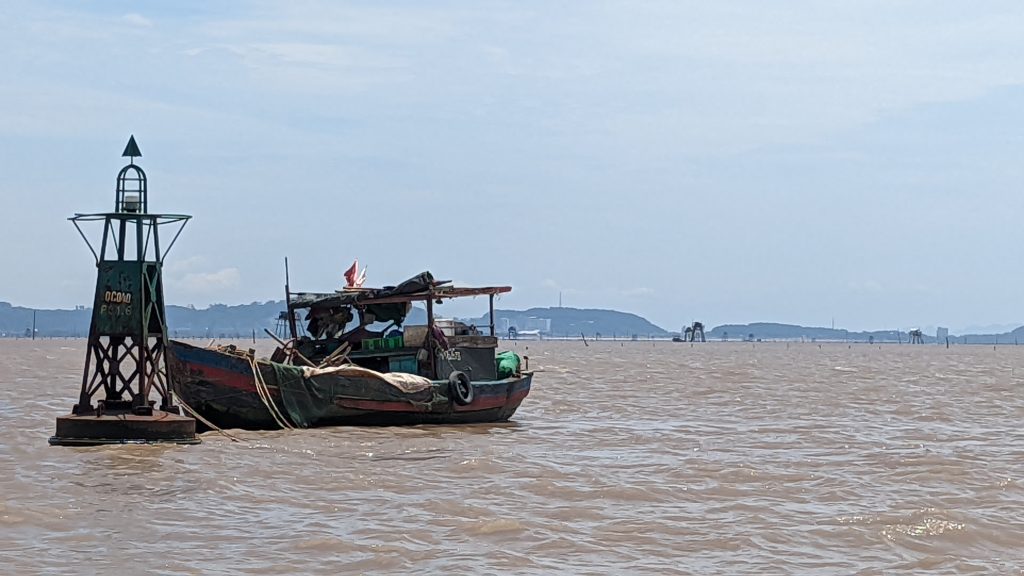
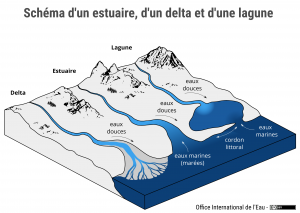
The aquatic realm at the interface between the continent and the ocean, encompassing estuaries, deltas, lagoons and the coastal ocean, is a key region for the Earth cycles of water, matter and biogeochemistry.
Our approach builds on the notion of ‘continuum’, meaning that we consider all the components of the land-sea interface (wetlands, estuaries, oceanic shelf, ..) as well as all the interactions that connect them.
Why study the Continent-Ocean continuum ?
In the continuum region, the flows and transports of matter, contaminant, nutrients are characterized by large changes, due to the variability of the forcing (river discharge, tides, sea level, surface gravity waves, oceanic circulation induced by air-sea fluxes either locally or remotely) but also due to the interactions between the different physical and biogeochimical processes.
Human activities, such as agriculture, sand mining, construction and coastal development, add a further footprint to these variabilities in a cycle of actions and feedbacks that is still poorly understood both at local and global scales.